
SDM Voice|Prof. Chihiro Hosoda
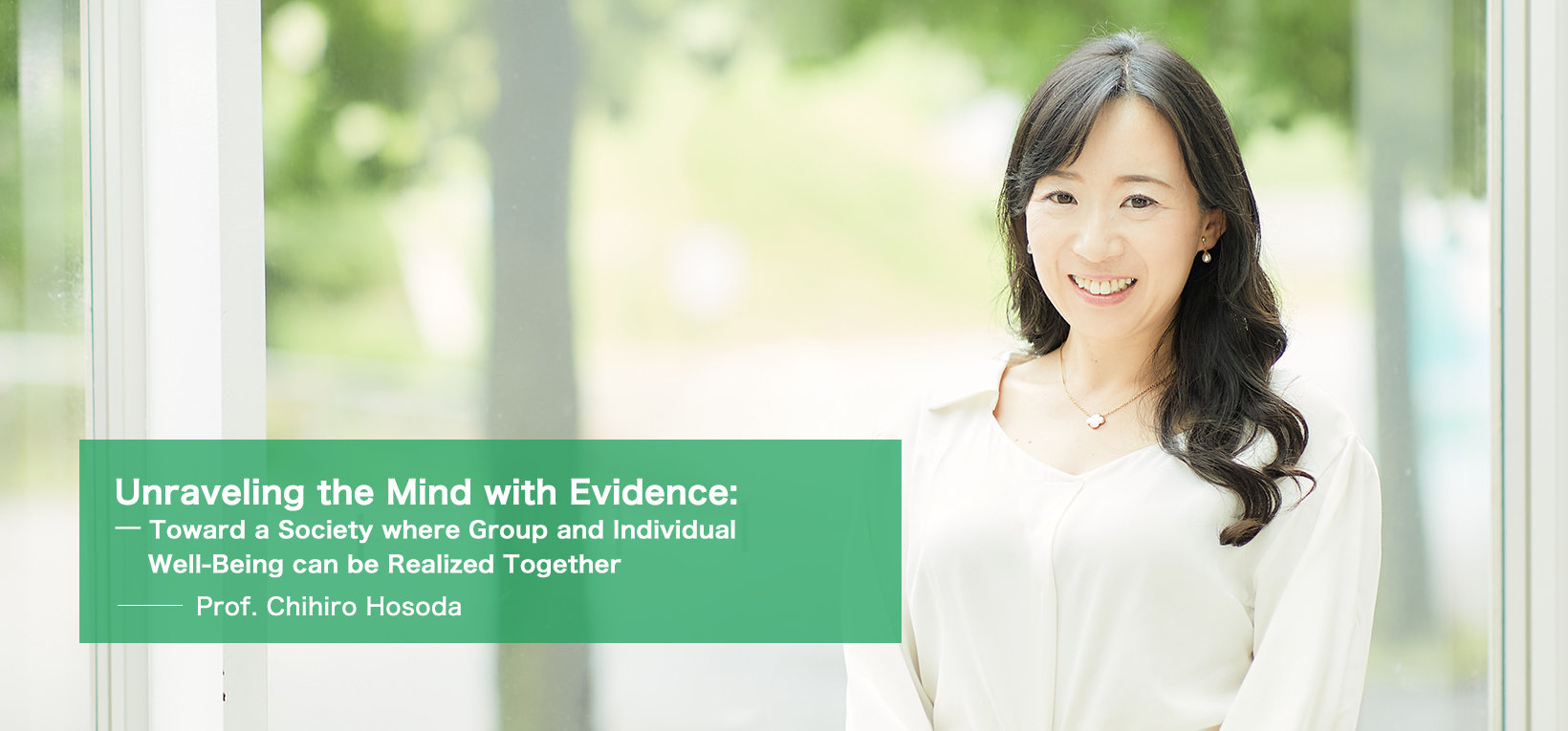
“Communication would be smoother if you understand what makes them, them.” Professor Chihiro Hosoda is on a quest to help individuals and groups live better by using neuroscientific insights to uncover what makes people tick.
Professor Hosoda joined Keio University’s Graduate School of System Design and Management (SDM) while continuing to engage in fundamental research at Tohoku University. We sat down with the professor to find out what started it all and what her thoughts are on the evidence-based implementation of research ideas.
Profile
Chihiro Hosoda
Professor Chihiro Hosoda holds a concurrent appointment as associate professor at Tohoku University's Graduate School of Information Sciences and Institute of Development, Aging, and Cancer. She also serves as a project manager in Goal 9 of the Cabinet's Moonshot R&D Program. In addition, she is a committee member in the Working Group on Living, Holistic Education, and Time for Exploration--part of the Ministry of Education, Culture, Sports, Science and Technology (MEXT)'s Central Council for Education--and in Sendai City's Scientific Research on the Motivation to Learn project. Professor Hosoda's work synthesizes her expertise in systems design with insights in neuroscience, information science, education and learning science, and well-being design, with an eye toward evidence-based applications in ability augmentation and interpersonal relationships. She is promoting the real-world application and verification of scholarly insights on education, childcare support, social capital, community living, non-cognitive skills, human resource development, regional co-creation, femtech, and healthcare from a neuroscience perspective.
Uncovering various mysteries, from the "brain that manipulates language" to the neural bases of agency and trust
It began with an innocent question posed as a child. Seeing international school children effortlessly switch between English and Japanese on the subway to school, I'd always wondered "How do they do it?" As a university student, I happened to take a class by a medical school professor where I learned about "bilingual aphasia," a phenomenon of bilingual individuals becoming unable to speak just one of two of their languages. I then realized, "so it's the brain that manipulates language," and thus began my foray into neuroscience research.
<>p As a graduate student, I worked on an experiment to see what would happen when people who struggled with English practiced the language. Would there be any changes in their brain? The answer was yes, and the change was structural. However, I made another unexpected discovery. Although the participants were all highly motivated initially in wanting to be able to speak English, there was a stream of dropouts throughout the experiment. I realized that, in all things, one must keep at it in order to become proficient. I saw a need to shed light on the fact that one level below the ability to learn a new language is the more foundational ability to unflinchingly continue on toward a goal. I then began my research into agency (self-directedness) and non-cognitive skills (e.g., executive function and motivation), particularly with regard to their neural bases.Discussions of "non-cognitive skills" tend to revolve around early-childhood education. However, the brain's prefrontal cortex, which underlies non-cognitive skills, undergoes functional development relatively late in life, and its key developmental window is from puberty to the mid-20s. Thus, evidence must be meticulously gathered to fill in this gap between popular consciousness and scientific fact. Furthermore, in the course of my research, it became clear that parent-child communication and the state of the family are foundational to non-cognitive skills, and my work came to engage research on the developmental environment of children. Despite appearing disjointed when viewed from the outside, to me, they all come together to tell a single story.
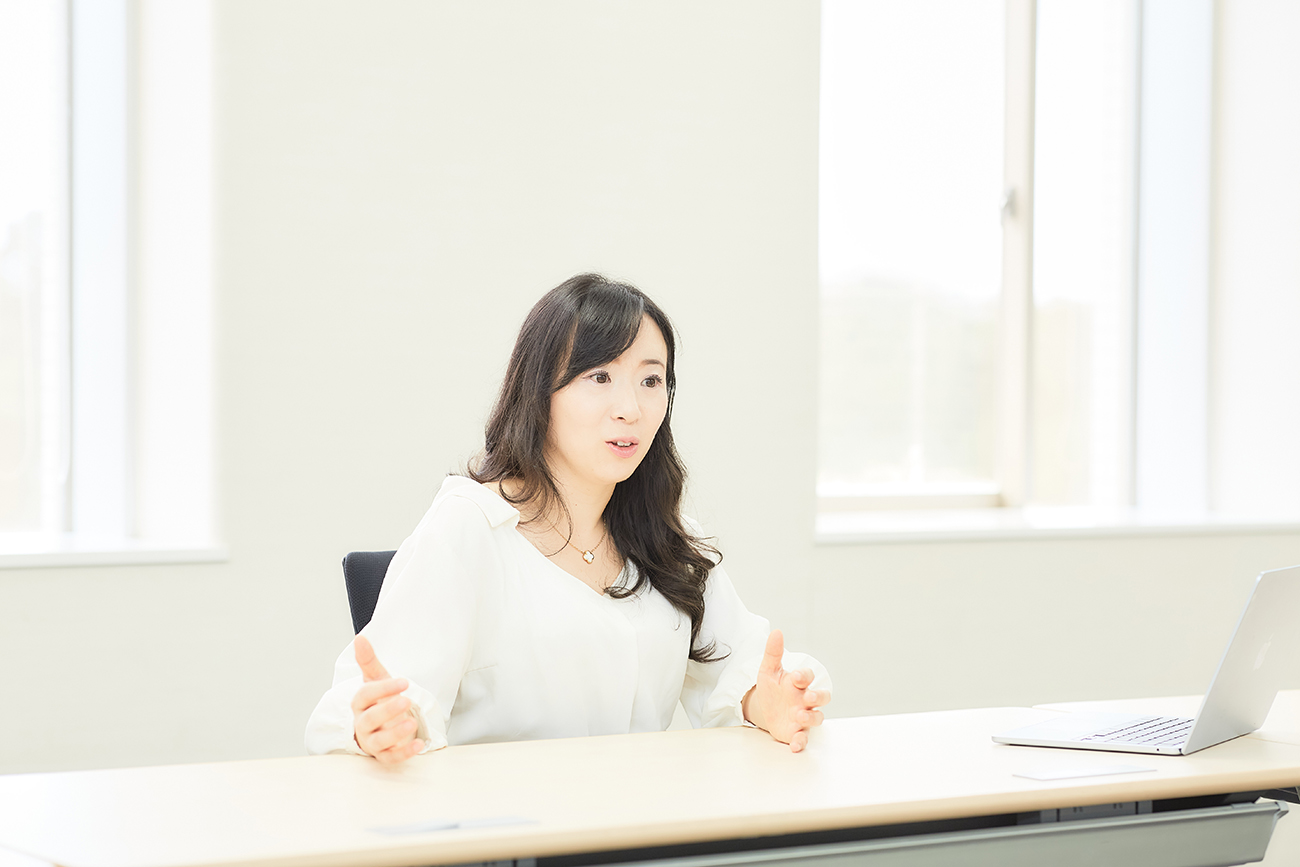
Communication would be smoother if we "understand what makes them, them."
The common thread that runs through my work is the concept of "individually tailored optimization." What is right for someone differs from person to person, whether in education or human-resource development. Even medication works for some people but not others. Everyone would agree on the importance of individually tailored optimization, but most carry on with little understanding of what makes that "individual" them. Thus, I visualize an individual's unique characteristics by first taking their neurological and biometric measurements to obtain data on key psychological indices. The starting point is to scientifically demonstrate how we can motivate or draw out the agency of this person in particular.
Understanding a person in their uniqueness is directly related to effective communication. Well-being cannot be realized alone. Even if three people with a high level of well-being come together, the well-being of them as a group will be negatively affected if communication between them is poor. Effective approaches to enhancing individual versus group well-being are unlikely to be the same. Thus, I aim to use computational modeling, and other methods, to visualize the mechanism that allows both to be realized simultaneously. At the heart of that research is the fundamental question of how trust forms over time between individuals. What creates relationships in which we can think, "I can trust this person with my child," or "I know they'll help me in times of need"? I wish to use scientific concepts to understand qualities like "consideration" that have long been discussed only in the abstract.
The approach to doing so lies in creating "digital twins" of people's minds. AI can be used to make sense of large, unwieldy data sets on human communication that had been impossible to analyze. If we can apply AI to real-world data to simulate the communicative responses of people, while demonstrating that such an approach is valid, we can test how people relate to each other without risk of harm to actual participants. We usually have rules of thumb like "I'll relate to this person this way," but, in fact, we remain unaware of how they are affected by these choices in our relationship with them. If we can see the answers to questions such as "what if I change what I say based on how they're doing?", then understanding the other person's mind is not simply a matter left to individual finesse or rules of thumb. Communication would be smoother if we understand what makes them, them.
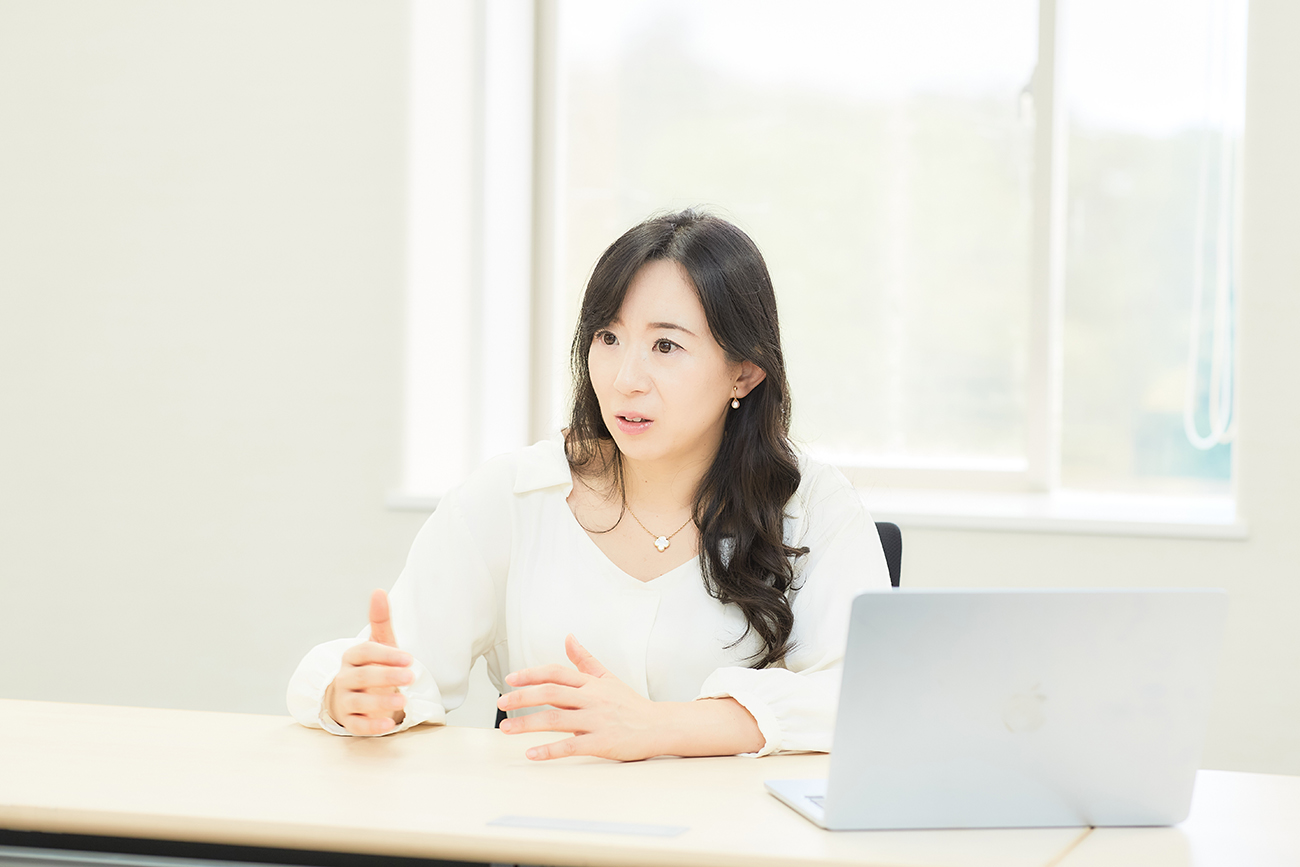
Why the generalizability of evidence is important: Toward the practical application of research ideas
I have my own lab at Tohoku University where I'm continuing my work in fundamental research. At SDM, I'm looking to engage in research of immediate use to society, in domains closer to real-world applications. For example, a newly enrolled student is looking to address the problem of chronic absenteeism, and their work would allow us to engage in the task of comparing fundamental research insights against the evaluation of real-world support measures. Motivating this work is the belief that children should also be watched over by society as a whole. Indeed, in Japan, society tends to pin the blame solely on parents whenever something goes wrong. Such expectations are suffocating, especially in today's society where dual-income households are the norm. In a workplace, teams give their all to salvage a misstep by one of their own. Similarly, in a child's developmental environment, people ought to step in and help instead of simply blaming the parents or the child. We need frameworks that make this possible, even more so given our declining population.
I have also worked with local partners to address issues in regional provinces. In Sado, Niigata Prefecture, I was involved in a program where schoolchildren play an active role as straw sandal weavers in support of traditional festivals. This program aims to not only preserve this piece of local tradition but also help schoolchildren find a place to call their own outside of school. Through their contribution to their regional community, the value of the children themselves comes to be better recognized. I want to design mechanisms like that.
Many SDM students are entrepreneurs or working adults, and it is interesting to see where they cast their focus. However, since we're doing research in a university, I'd like us to attach importance to the general applicability of our work. Indeed, cutting-edge science is defined by insights that change with the times as a result of methodological advances in measurement and analysis. Nonetheless, scientists still need to properly show the generalizability of their insights based on a faithful adherence to the scientific procedures of their time. We cannot simply believe that our methods are effective. For whom are they effective, for whom are they not? And have we demonstrated their efficacy? If there are negative outcomes, just take them as feedback for improvement. This, I think, is the biggest difference between university research and non-profit work. Especially in fields related to the mind and brain, one wrong move and you'll veer into pseudoscience. It is precisely because of this that I wish to challenge myself at SDM to bring my research out into society, even as I spare no effort in being fastidious about evidence and the evaluation of outcomes.
-
Prof. Chihiro Hosoda
-
Prof. Emi Tamaki
-
Prof. Yoshiyuki Suimon
-
Prof. Hiroko Inokuma
-
Prof. Takahiro Yakoh
-
Dr. Steven Urueta
-
Dr. Prafull Kasture
-
Associate Prof. Masahiro NIITSUMA
-
Prof. Yoshiki YAMAGATA
-

Naomi Simumba
-
Prof. Naohiko KOHTAKE
-
Prof. Tetsuya Toma
-
Prof. Seiko SHIRASAKA
-
Prof. Hidekazu NISHIMURA
-
Associate Prof. Makoto IOKI